Questions?
(800) 748-5647
(800) 748-5647
(800) 748-5647
(800) 748-5647
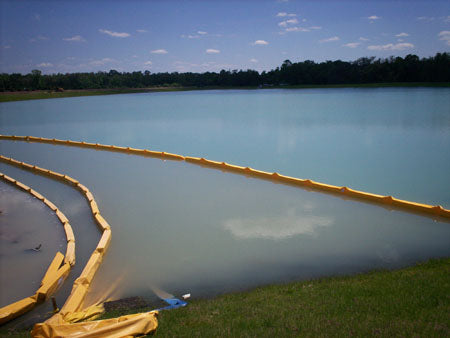
A turbidity curtain — also called a silt barrier — is a marine-grade floating curtain that pens in sediment-laden water during in-water work, so the silt settles out before it reaches open water.
The first thing to nail down — and the first question the Selector asks — is your water conditions. That's what sets the Type.
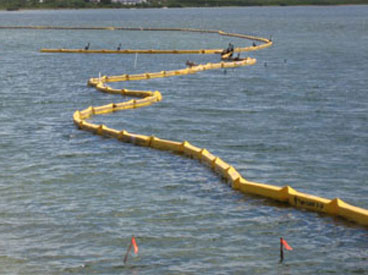
These are Tough Guy barriers by AER-FLO, made in the USA, and all three types meet or exceed federal and state specs including NPDES Phase II. They're used for dredging, dewatering, pile driving, demolition, and shoreline construction — anywhere you need to keep stirred-up sediment from drifting into a protected waterway. The difference between the types comes down to how much the water moves.
For ponds, shallow lakes, small streams, marshes, and canals with current under about 1 ft/s. The most frequently specified barrier; anchored with stakes or concrete blocks.
Type 2 · Moving WaterFor rivers, harbors, and ports with light wind and current — dredging, demolition, pile driving. The "work horse," with a top load cable and stress plates reinforcing the corners.
Type 3 · Rough / TidalFor rivers, bays, harbors, and inter-coastal sites. A heavy-duty version of Type 2 with about 20% of the skirt replaced by filter fabric to relieve pressure while still holding silt.
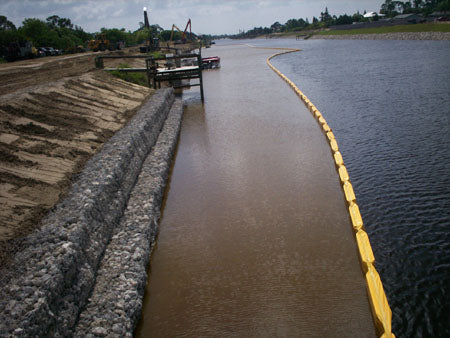
Every floating curtain works the same way: a buoyant flotation boom rides on the surface, an impervious vinyl/polyester skirt hangs straight down, and a galvanized steel chain sealed into the bottom hem acts as ballast to keep that skirt vertical instead of billowing. The ends are sealed around poly rope with brass grommets so 50-foot sections connect into whatever length you need. The fabric is heavy 18 oz laminated vinyl/polyester with heat-sealed seams, in Tough Guy Yellow. Type 2 adds a top load cable and corner stress plates for tougher conditions, and Type 3 swaps in a filter-fabric panel that bleeds off water pressure while still trapping silt.
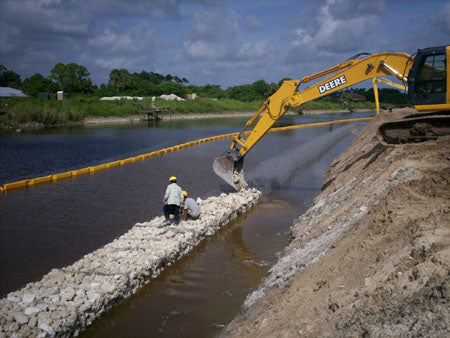
Curtains come in 50-foot sections you connect for length, in standard depths of 3, 4, and 10 feet, with custom depths from 2 to 100 feet. Depth is where people go wrong: in calm, non-tidal water you extend the skirt the full depth of the waterway, but in tidal, wind, or wave conditions you should never let the skirt reach the bottom — leave about a one-foot gap above the bottom at low water. A skirt dragging the bottom fans settled sediment right back up. It's also not practical to run deeper than 10-12 feet even in deep water. Anchor anything in moving, tidal, or windy water: stakes or concrete blocks for Type 1, or pre-assembled Tough Guy Anchor Kits (anchor, chain, rope, thimbles, buoy, and shackles) for the rest.
In tidal, wind, or wave conditions, keep that one-foot gap between the ballast chain and the bottom at low water — a curtain that scrapes the bottom stirs up the very sediment you're trying to contain. For demanding Type 3 sites, have a qualified engineer design the anchorage and layout; the forces involved leave little room to improvise.
If you're on a tight schedule, the smaller Type 1 DOT stock sizes — like the 5′×50′ — typically ship within about one business day. Everything else, including custom depths and all Type 2 and Type 3 curtains, runs a 5-7 business day build before shipping. Free shipping is included to any address in the continental US, and lighted navigation buoys and custom colors are available when a site calls for them. Because all three types use the same fabric and construction, paying for a heavier type than your water needs rarely buys you anything — match the type to the conditions and put the budget into the right depth and anchoring instead.
Read your water first: calm/no current → Type 1; moving to ~1.5 knots with chop → Type 2; tidal or up to ~3 knots with wind and waves → Type 3
Size the depth to contain the plume — full depth in calm water, but in tidal/wind/wave conditions leave a ~1 ft gap above the bottom and don't exceed 10-12 ft
Get your length in 50-ft sections and connect them; standard depths are 3, 4, and 10 ft, with custom from 2 to 100 ft
Anchor anything in moving, tidal, or windy water — stakes or blocks for Type 1, Anchor Kits for the rest
Need it fast? Type 1 stock sizes ship in about a business day; everything else is a 5-7 day build
Popular places to start: the calm-water Type 1 DOT 3′×50′ and Type 1 DOT 10′×50′ stock curtains, the moving-water Type 2 Construction Turbidity Curtain, and the heavy-duty Type 3 DOT 10′×50′ — or see the Silt Curtain overview for the full lineup. All ship free in the continental US.
Use the Turbidity Curtain Selector above — answer a few questions about your water conditions and depth, and it points you to the right type and size.
Tough Guy by AER-FLO · Made in the USA · Free shipping on every order