
Questions?
(800) 748-5647
(800) 748-5647
(800) 748-5647
(800) 748-5647
Paramount Materials — Geosynthetics
TenCate Miragrid® XT high-strength uniaxial geogrids for soil reinforcement — retaining walls, steepened slopes, and MSE structures. Eight strengths, stocked by the roll.
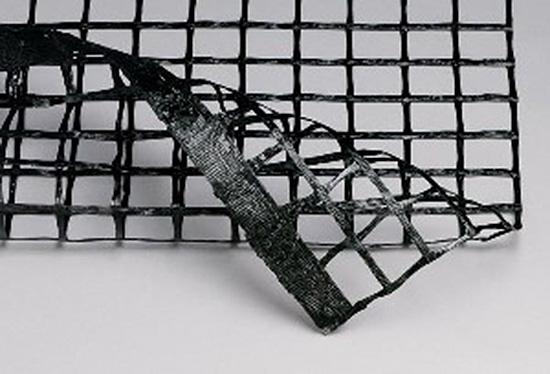
What it is
A uniaxial geogrid is engineered to carry load in one direction — its machine direction — which is exactly what a reinforced soil mass needs. TenCate Miragrid® XT grids are polymer-coated woven polyester, built for the tensile demands of retaining walls, steepened slopes, and landfills.
They deliver high long-term design strength (LTDS), excellent creep resistance, and strong soil interaction, while staying light and flexible enough to handle and connect on site. That makes them a cost-effective choice for both temporary and permanent Mechanically Stabilized Earth (MSE) structures.
Reinforces the soil mass behind segmental (SRW) and MSE block walls for stable, tall structures.
Lets you build slopes steeper than the soil's natural angle without a facing wall.
Reinforced fill for load-bearing abutments and approach embankments.
Base reinforcement and veneer stability for cells, berms, and embankments over soft soils.
Long-term strength
High long-term design strength carries load for the full service life of a permanent structure.
Stays put
Woven polyester resists stretching under sustained load, holding the reinforced mass in place.
Grip
The coated grid structure locks into backfill for strong pullout resistance and connection.
On site
Easy to handle, cut, and connect between wall blocks — faster placement than stiff grids.

Keystone Compac blocks with Miragrid® XT geogrid built a structurally sound, aesthetically appealing wall that let Manchester-Boston Regional Airport lengthen its runway.
An airport expansion needed to extend the runway, but the existing entrance roadway held back the available land. A retaining wall was required to reclaim it.
A segmental retaining wall of Keystone Compac blocks reinforced with Miragrid® XT geogrid — required to be both structurally sound and visually clean.
The finished wall reached 28 feet, with tiered 14-foot sections merging into a third wall — roughly 100,000 sq ft of frontage, a strong alternative to poured concrete.

A Keystone wall system reinforced with Miragrid® 3XT, 5XT, and 8XT solved a 75-foot grade change to carry a new access road into Tesoro's headquarters site.
The access road faced a 75-foot elevation drop with limited space — a steepened slope wasn't possible, so a retaining wall was required on the east side.
A Keystone wall was chosen for its height-to-depth ratio and looks. Miragrid® 3XT, 5XT, and 8XT were specified for their long-term and creep-reduced strength and block connection.
Built as a three-tiered system up to 43 feet tall. The grids' flexibility let the contractor connect between blocks easily; the wall met load and aesthetic goals on time.

A hybrid soil-nail and segmental-wall design using Miragrid® geogrid created parking for new retail while keeping the service road above the site open.
A shopping-center owner needed parking for new tenants while preserving the existing road above — with significant grade problems behind the wall line.
Soil nails were drilled into the steepest cut areas with geogrid tied to a header beam; standard SRW geogrid design was used across the fill areas.
The approach maximized the usable footprint while keeping traffic flowing, and let the developer vary block style and texture across the project.
Common questions
A uniaxial geogrid is a geosynthetic reinforcement designed to carry tensile load in one primary direction (its machine direction). That single-direction strength is ideal for reinforced soil structures like retaining walls and slopes, where the load pulls in one direction. Miragrid® XT grids are polymer-coated woven polyester.
Uniaxial geogrid is strongest in one direction and is used for soil reinforcement — retaining walls, steepened slopes, and MSE structures. Biaxial geogrid carries load in two directions and is used mainly for base stabilization under roads and working platforms. If you're reinforcing a wall or slope, you want uniaxial.
Most segmental retaining walls above about 3–4 feet need geogrid reinforcement to stay stable, and taller or surcharged walls almost always do. The exact requirement depends on wall height, soil, and loading, and should follow the wall engineer's design. Use the Geogrid Spec Finder to match a Miragrid XT strength to your design values.
Geogrid embedment length is set by the wall design — it depends on wall height, soil properties, and loading, and is typically a percentage of the wall height. Follow the reinforcement lengths on your engineered wall drawings rather than a rule of thumb.
The number reflects the grid's strength — higher numbers carry more load. The line runs 3XT, 5XT, 7XT, 8XT, 10XT, 20XT, 22XT, and 24XT, so you can match the grade to your design's required long-term strength. All ship by the roll with free shipping.
The Geogrid Spec Finder narrows Miragrid XT by long-term design strength and application — so you can spec the right grade for your wall or slope yourself. Pricing for most jobs is listed right on the site; need a volume quote? Request one below.